Back From Vacation

As I might have mentioned in another post, I just got back from a vacation. During this interlude, I put myself in the “Tavern” in HabitRPG and allowed myself to have a few drinks. I didn’t hold to doing 750 words daily. And didn’t do Duolingo or my daily meditations.

Two things about this.

One, I need to figure a way to continue being rigorous about my discipline through such interludes. There will always be interruptions, and I think the key to all of this is to soldier on despite them. Now for this trip, there were times I really didn’t have time to do my 750 words or Duolingo, and that’s fine. BUT it was not a reason to drink because that action can be done anywhere. Just a thought.

But secondly, I’ve found it really difficult to get back on track. I initially felt like I could get back “on the wagon” for all habits the next day after coming back, but instead it’s taken me a while to get over what I’ll call habit inertia. And that’s another good reason to power through vacations or other interruptions in some way or another. It’s just plain difficult to get started again.

Well I’m back on today - so far I’ve completed my meditation, 750 words, I’ve gotten out of the tavern on HabitRPG, and I’ll be doing my Duolingo shortly.

Notes on Experimentation

Lally’s experiments on self-discipline got me thinking about experiments I could possibly perform on the subject. Here are a few thoughts:

1. If there is an automaticity index, is there a happiness or willpower index? If not, is it possible to com up with them?

2. Does mood affect willpower? It seems like it does given my experience with the effect of humorous videos on ego-depletion.

3. According to Lally’s study, different actions take different amounts of time to develop into habits - Do actions that take less willpower to develop automaticity take an equal amount of time to lose automaticity? Or Do they take more time?

4. What other actions rejuvenate willpower?

5. Does relaxation affect willpower?

6. What is an optimal willpower workout?

7. How many actions are optimal for habit formation? Given 6 actions that have a similar “will power” and automaticity value, how many actions are “stackable” - what is the likelyhood that 2 vs 6 actions will achieve full automaticity.

8. Is there an automaticity constant that can be derived from specific actions? If automaticity can be mapped, and if will can be mapped, then shouldn’t there be a value derived for willpower and automaticity for a given action?

9. Do actions that rejuvenate ego-depletion have the same affect or do they diminish? Can I exert willpower, then rejuvenate willpower, and repeat ad infinitum? Or does each rejuvenation yield fewer and fewer “willpower points?

These are all rather vague notions, but I think it’s important to note them so that they can be examined in detail later.

Phillippa Lally and the Number of Days to Form a Habit

Common consensus seems to suggest that it either takes 21 days or 30 days to form a habit.

Based on my own observations, this is clearly not true - and Philippa Lally’s study in the European Journal of Social Psychology seems to suggest otherwise.

The study analyzes a group, has them perform various tasks, and asks them at what level of of automaticity they are at with these tasks every day.

The study suggests that some tasks take less time and some tasks more time before they are considered a habit, but the average is 66 days.

This brings up a number of interesting points:

1. Perhaps I should use an index like she did in order to assess my level of habituation for any given task.

2. Perhaps programs like Level Me Up, which use a number of hours to determine mastery, are not as good as a program that functions by checking out a daily practice of a skill. I’ve already begun to have doubts about Level Me Up - this might be it’s death knell.

3. What are the tasks that are easier and take longer to form into habits? I’m assuming this has to do with those that take more willpower. If habituation can be indexed by a questionnaire, perhaps I could come up with a willpower index in order to attempt to find some sort of correlation between willpower expenditure and “automaticity” - what the studies are using as the technical term for the progression of habit formation.

This is some really exciting stuff, because it’s the first real testing as to the mechanics of habit formation in scientific conditions.

Travel and Gamification

I travel for work. I’m going to have to figure out some sort of protocol to incorporate gamification through (or around) travel.

Since I have a smart phone, some things are easy. Meditation, no problem - Level Me Up is a mobile app only. Duolingo has a mobile option as well. But HabitRPG doesn’t have a mobile app yet and 750 words is a little bit trickier because ideally I would like to not have to haul around my laptop.

Perhaps I should invest in a fold-able full size keyboard and a mobile word processing program for my phone…

Breaking Points and Ego Depletion

I’m currently reading a book entitled Willpower by Tierney and Baumeister. In it the authors term the erosion of willpower as “ego depletion”.

A few days ago I exerted a lot of willpower through abstaining from alcohol in an environment highly conducive to drinking for me, doing Duolingo, writing on 750words, my own work, meditating, and reading. The next day I was completely and utterly depleted.

So I looked online to see what recharges ego-depletion. Sleep and glucose (like a candy bar) work, but neither was helpful in the situation - I couldn’t sleep and I don’t want to go to sugar when later on I’ll be incorporating working out and nutrition to the program.

One suggestion was to watch funny youtube videos. So, I attempted it, timing myself, and using a rudimentary ego-depletion scale (1-10) to see how it affected me over time. After 5 minutes of watching a favorite standup comedian, I felt I had gotten to about a 4. After 12 minutes, I was up to a 7, and after 20 minutes I was up to a 9.

Later that day I felt more depleted, but had a piece of cake, which immediately got me writing my daily 750words.

Although I didn’t complete my Duolingo and meditation for that day, I did accomplish more than I thought I would, given my level of mental exhaustion.

Clearly, watching funny videos has to be incorporated into my program.

Plateau Busting

image

Plateaus seem to be THE thing that confounds everyone.

Let’s say someone wants to learn a musical instrument. There’s an “onboarding” period where people learn a ton and feedback is great. It’s new and exciting and you want to continue with vigor. Then you hit the slower steady progress. You are still getting feedback, and you are making progress so you continue - but it’s the daily grind.

Then you hit the plateau, where you work and work but don’t notice any visible improvement. That’s where most people give up, and the habit (and learning) stops.

There are a few methods for getting through plateaus. For one, just sheer willpower - either yours, or for many in school, their parent’s. The other is to vary practice so that you don’t get bored of the routine. Another is to KNOW that it’s there - the theory is that knowledge itself of the plateau will allow you to save up willpower, which you’ll use to bust through the plateau. And another method is to take a break and come back - “resetting” your habit processors so to speak.

The point of this endeavor is really about plateaus and willpower. Does gamification lower the amount of willpower needed to get through plateaus? Does this lowered willpower threshold allow for more skills to be habituated at once. It’s really two questions.

1) Sure Duolingo is fun, but will it continue to be fun after 3 or 4 months?

2) The willpower threshold in gamifcation is lowered through engagement - it’s fun. Will this allow me to learn multiple skills and practices - or will I fizzle out because I’m trying to do too many things?

A lot of people seem to roughly calculate the plateau phase of any task as kicking in at three months - and that’s the mark I’ll be looking at closely in the future. I might decide to stagger various strategies to see which ones work and which ones don’t. This will take some tracking, because I started each skill in a staggered way - duolingo first, 750 words a week after, etc.

4th Skill - Meditation

This is the beginning of week 3. So far I have 3 skills I’m working on - Spanish language learning through Duolingo (Level 8), daily writing through 750words (8 day streak, not drinking through HabtitRPG (Level 2) - which I hope to expand into general nutrition).

This week I want to add on meditation/mental health.

I’ve ramped up to this by occasionally using Level Me Up.

As I’ve mentioned before, I’m uncertain if this is the best program to use because it’s quite linear - you level based on time and that’s really it. Habit RPG might be better but again - just not sure yet.

I’m using my own meditation sequences that I’ve found very helpful in the past - they’re based on the work of Shinzen Young, Mark Cunningham, and Steve Piccus. I’d like this to be a daily practice at least because it affects my mood for the rest of the day.

I really like these scripts, but I might later try expand by using SuperBetter.

July 4th and Rising to the Challenge of Habituation

On July 4th I had a party at my house. Lots of grilling, beer, etc.

What was interesting is that I felt the whole thing was a challenge I was rising to meet.

I didn’t drink and I actually viewed it as a challenge. You see, on Habit RPG I actually get bonus points if I don’t drink at a party. I actually feel so much better about going to a bar or whatnot because I know I get more points in game if other people are drinking around me and I’m not. In specific, I’ve coded the game to give me more points at my moments of greatest weakness.

The other day a friend made some comment about going out for a drink, but not wanting to ask me to go because I won’t drink. I actually encouraged it, because I knew I’d get double points, hahaha. And that’s great - the whole point of this is to be more engaged in life, to do more rather than avoid situations completely.

And before this gamification, I did view parties and bars as huge temptations - and it is hard to stay sober when everyone else is drinking - it’s social pressure. This is the first time I’ve viewed it as a challenge - I actually want to get into those situations because it gives me the opportunity to get more points. This is a huge reframing.

Back at my July 4th party, I actually took about half an hour out from the party to go to my room and write so that I could fulfill my 750words.com mission for the day.

After I finished a guy messaged me, giving me a hard time about not doing my writing and posting it like I usually do - I got a huge kick out of messaging him back to check again.

And that mentality is what I want to cultivate - that evil grin you get when someone is expecting you to completely fail, but you know you’ve got the proof to show them that you have risen. It’s a surge of power knowing you are crushing their expectations. I should really come up with a word for this powerful mindset and cultivate it even more.

I am very curious how this dynamic, which is valuable in and of itself right now, will affect me over the long term while adding other types of discipline to  my life.

Habit RPG and Habits of Omission Part 2

image

I’ve decided to not only NOT drink alcohol, but also coffee, which tends to make me worried and nervous.

I’ve done this by having a DAILIES - not drinking coffee/beer for a day. This section in Habit RPG is a daily task that gets more and more difficult - so in the game your score gets higher and higher the longer your streak is.

I’ve also created HABITS - specific tasks. I wanted ways to conceive of tasks that are positive rather than simply getting docked for failing to NOT do something.

So every time I refuse a drink, I get points. Every time I don’t drink an alcoholic drink at a bar or social event, I get even more points ( I’ve gone into the advanced features to weight the task as “difficult” thereby giving more points for every successful completion).

According to The Power of Habit, it is easier to replace a task than not do it - so I also get points every time I replace coffee or alcohol with water - and I might also include a replacement with any positive activity, like going for a walk.

Lastly, I’ve decided to use a technique in meditation to fight any cravings. My addiction isn’t physical, it’s more a social habit based on the experience and the art of a finely crafted drink amongst friends, etc. There is a specific technique to bring about a feeling - normally irritation or anger - and then calming the self as a way of practicing avoiding the pitfalls of actions that come from anger.

In this way one instance of practicing bringing about anger/irritation and quelling the emotion is like one rep. I’ve gotten a lot out of that technique when it comes to emotional management, and see no reason why it wouldn’t work with any other emotion. So I’m doing it for alcohol.

I’ll look up pics of drinks or situations, feel the cravings enter, and then practicing dealing with them by relaxing my mind and unhooking the feeling of a stimulus with the craving. I’ll go into more detail on this in another post.

In Habit RPG one “rep” of this will also be a HABIT and I will get points from doing this too.

So far here are the specifics of the game:

-Not drinking a margarita at a Mexican place (Just came up with this one recently) - MEDIUM difficulty, cause I associate the two

-Drinking water as a replacement for alcohol/coffee - Easy

-Not drinking coffee - Easy - not sure if this should be replaced with the later or not

-Not drinking at a bar - DIFFICULT

-Not drinking at a non-bar social event - DIFFICULT

-Not drinking coffee/alcohol for the day

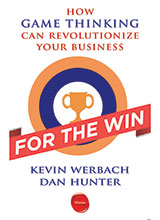
Power of Habit by Werbach and Hunter

image

I was really curious about this book because it seems to be the go-to book on gamification. I find it incredibly helpful - here are a few points:

-“behavior-change gamification seeks to form beneficial new habits among a populationp 23

So that’s the official term for what I’m focusing on!

-Problems with boredom

However, if you approach gamification in this way you’ll quickly run into trouble….But these users often get burnt out by the enldess treadmill of points…and abandon the system.

This could be something look out for in programs that either don’t have a leaderboard or don’t hone in on it. For example Duolingo as far as I understand it hones in on friends that are close to you, and those are the only ones that show up on the leaderboard.

-p32

Another interesting aspect - the lack of failure makes you continue in the game.

p61

This was interesting - at some point just regularly giving rewards isn’t enough - I assume that most games get around this by using badges or quests or whatnot to shake things up

p66

It’s not just badges, but unexpected badges that work.

p95

The book also talks about progressions stairs - HOW players level up - a regular progression is boring - games often start with a simple progression (onboarding) because it helps the game become more addicting in the beginning, with every next level getting harder and harder - sometimes called an RPG progression. The book says that this isn’t good enough - a better game will offset this with harder and easier levels so that players can catch their breath and experience a sense of mastery before a challenge.

Habit RPG and Habits of Omission Part 1

image

Habit RPG works as a customizable gamification of habits. Basically you input things that are daily habits, and whether or not you can get penalized or get points from an action.  There is also a “daily” section, where not doing a  task penalizes you.

You have an avatar that can get gold, experience to level up, and hit points which can be taken away. You have the option of buying potions, armor, etc. to level up your character.

I like this because it adds an extra dimension to the gamification - many programs allow you to level without an avatar or equipment - I believe that with the avatar and equipment you add an extra level of addiction.

Books like For the Win by Werbach and Hunter (I’ll do a book review of it later) talk about 4 types of players. One category - the explorers - get addicted because they want to discover new aspects to the imaginary situation - they want to know what the next spell is or the new weapon. And that is definitely the kind of player I am.

Unfortunately the other kind of player I am is someone who likes PvP - I like knowing I have the power to destroyer others - I think Werbach and Hunter call these people “killers.”

I’m very curious how HabitRPG compares to something like Fitocracy, which DOES allow for PvP “battles”.

Habits of Omission

I decided to do start two gamified habits this week because one, writing, has to do with work, and this one is a habit of omission.

I suppose you could call it breaking a bad habit, but a lot of psychology seems to suggest that positive reinforcement works better for long term habituation. So “habits of omission” it is.

Specifically the habit I want to break is drinking.

I find that in the habituation game, alcohol is perhaps the absolute worst thing you can do for several reasons.

For one, even a few drinks will sap you of willpower. It actively corrupts discipline and since this entire project revolves around willpower, this is not a good thing.

Also, since I don’t drink regularly, even a few drinks will make me hungover the next day, making it highly unlikely that I will continue in my gamification - and with a day or two away from the game, I run the risk of leaving the game.

Lastly, there are other skills later on that tend to get corrupted by alcohol. Later on I want to gamify eating right, and not only is alcohol not really great, but it tends to give you the munchies. Being hungover is not good for getting into shape when I gamify fitness, nor is it good for mental health. I just read a very great thread on reddit about a guy with mental health issues who was “self medicating” - one redditor responded by saying that the first thing people with mental health issues should do is stop drinking because it exacerbates the situation. I have noted this in my own mental health.

I’ll get into the specifics in another post, because I find that Habits of Omission have to be treated differently.

750words and "Morning Pages" for Writing

image

750 Words is one of two gamification programs I’m initiating this week. The concept is based off “morning pages” - where one writes roughly 3 pages on any subject without heavily editing yourself.

Morning pages are used to get thoughts flowing, to get the process of  writing more and more a habitual thing rather than something that only comes when the mood strikes. Often times it’s the first step - just starting to write - that writers have difficulty with. Morning pages attack the problem of perfectionism - the idea that words first written down on a page have to be perfect rather than ones that can be edited later - and therefore help out with procrastination and writer’s block.

And I have all these problems.

I’ve used this with success in the past when I had a particularly bad case of writer’s block. Its something I wanted to do for a while to help out with work and help out with having more output.

750 words gamifies morning pages by making it into a scorecard similar to bowling. You get different badges as you go along, a visual record of progress, the ability to share on sites like facebook, and group challenges.

I ramped up using this program last week, but I’m doing a hard start this week.

Meditation and Mental Wellness Gamification

image

I am a big fan of mental wellness, self confidence, meditation, and all that hippy stuff. When I was younger, I used to meditate everyday, but I didn’t really appreciate how I could use it practically until recently (after years of depression and self confidence issues and whatnot).

So I was excited to find that Super Better is a program that gamifies mental health.

Unfortunately, I find it kind’ve….Idunno….scattered. I’ve only fiddled around with the program a few times, but the game options seem very random. I like the fact that it is the only gamified program I’ve seen so far that gives users a choice.

Choice is usually something that’s used in games to get gamers even more addicted - rather than coming up with one situation, you give a player several choices, either implicit or explicit, allowing for more palatable options, and boom, then they’ve got you. So I liked that part.

I’ve found other routines for mental health on my own that I find work incredibly well. What I need is a software that incorporates a personal routine and gamifies that without the need for specifics, and I think I found one example with

image

Level Me Up - an iPad/iPhone app, that uses Malcolm McDowell’s (I think other people contributed to this, but he’s the one whose known for it) 10,000 hours theory - 10,000 hours is roughly the amount of time it takes to gain mastery over a skill. The program divvies up this amount of time and has a timer - you can set the program to be linear or more RPG-like - meaning level 1 will be easier to complete, level 2 slightly more difficult, etc.

So far I like this, but I can see it getting really old really fast. There are no badges, no community, just levels that take progressively more and more time. I’ll post a full review on each of these programs later.

I am very curious to see how these small differences in game mechanics affect long-term habituation. The goal is to get addicted to a skill over a longer period, so I’m assuming that having badges and the ability to socialize the game will help to make a habit stick long-term. We’ll see.

"2 Shitty Pages" - Tim Ferriss on Lowered Quotas and Efficiency

Author Timothy Ferriss (author of The 4-Hour Workweek, The 4-Hour Body, and The 4-Hour Chef) at the 5:06 mark talks about how in daily tasks, lowering quotas allows you to achieve higher productivity. Lowered quotas help lower the inertia of starting tasks, which can be particularly difficult to overcome if you don’t really like the task.

His example is writing, which I personally hate doing in a systematic way. He mentions a particularly prolific friend who would consider the day a win if he produced “two shitty pages.” This is great, because often times it’s just the process of getting through that is difficult - we tend to want to edit as we are writing instead of after the fact. Perfectionism sounds great, but can be debilitating in terms of habituation. This mentality negates the need for perfection.

Programs like NaNoWriMo are particularly successful because they advocate the process of just getting the words onto the page whether they are good or not. Editing comes later, but is less psychologically debilitating than having to write words that need to perfect from the start.

The program I’m fiddling around with now, 750words, advocates the same thing in the form of “morning pages” - a practice that can equally be used for professional writing or to break out of writer’s block.

I’ve noticed that with most of my writing, it’s the act of just getting started that takes forever.

Six Scientifically Supported Ways to Crush Procrastination

A great article on procrastination. A few of the links talk about programs like NerdFitness and a few interesting reads on how other people dealt with tasks that needed to be made into a habit.

Brainstorming and Researching Games

In this post I want to brainstorm a list of games I want to play for this project. There are some things that are must-haves because they include basic skills that everyone should ideally be “playing” - work, eating, working out, finances, mental health. Others are in here because I’d be curious to learn them, but also things that people say they always want to learn at some point - things like music or something as basic as flossing. Unfortunately, several of these don’t have specific problems, so the challenge is to adapt general programs to include these habits.

Language - Duolingo | Memrise (for vocabulary)

Mental Health - Superbetter

Finances - Mint | Bobber (though I’m not sure if Mint is actually gamified and I don’t know if Bobber is active yet)

Physical Health - Gympact | Fitocracy | Nerdfitness

Work/Writing - 750words

Chores - Chorewars

General - HabitRPG | Levelmeup

Learning Coding - CodeAcademy

General Learning - Khan Academy

I’m sure I’ve missed a few, so I’ll update this list as I progress in the project. I’m also surprised I haven’t found programs for reading, music, nutrition, and cooking. There’s gotta be one for reading and nutrition, and I’ve seen some rumors online about a soon-to-be released cooking program.

Mid Week Status Check: Duolingo and Second Skill Ramp Up

I’m mid-week on my first game - Duolingo.

It’s definitely very addictive, and I find myself wanting to get back to it throughout the day. I’m curious how this feeling will change over the course of the progression.

I think it’s really important to listen to what I naturally feel. There is a point at which you want to force yourself to keep to a schedule. That is great when there’s one finite project, but for a year-long attempt to include a number of skills, that may deplete my willpower quickly.

It’s also good to record these inclinations to see what form of gamification is able to hook me for longer - will specific quirks of one game prove more practical in the long run?

Meanwhile I’m ramping up to my next program - by ramping up I mean just mucking about with the program so I know how to use it before actually commencing.

I believe I will either add a writing program, mental health, or a fitness program next week. More on the specifics later.

Power of Habit and the Number of Games

I read the Power of Habit by Charles Duhigg a while ago. One of the  things it discussed was the research going on related to self discipline and will power.

Basically it says that self discipline is one skill that can be worked out like a muscle. So working self discipline in one arena will inevitably help you out in another arena. But, it also acts like one depleteable resource - stretch yourself to thin, and all endeavors collapse.

What does this mean for this project? I have a number of skills I want to explore gamification with, but I don’t want the whole house of cards to collapse on me. So I’m going to be adding skills one at a time slowly.

This week I’m just really focusing Duolingo and I’ll add another skill after a week. I’m curious how slow or fast I can add skills before suffering any sort of strain to the addiction of playing these games.